
The New Reality of File Scanning
In August 2025, Nextron researchers uncovered a Linux backdoor, later named Plague, which left no forensic traces.
In fact, the backdoor had lived inside the system for months, even if several variants of Plague have been uploaded to VirusTotal, with no public detection rules and no confirmed sightings in the wild.
If such sophisticated threats can slip past traditional antivirus defenses, can we truly consider ourselves safe online?
Is the era of trusting antivirus engines over?
OPSWAT's MetaDefender Cloud comes to answer this question, offering a free, multi-engine file scanner that lets you scan files for malware and perform an instant free online virus scan using 20+ antivirus engines.
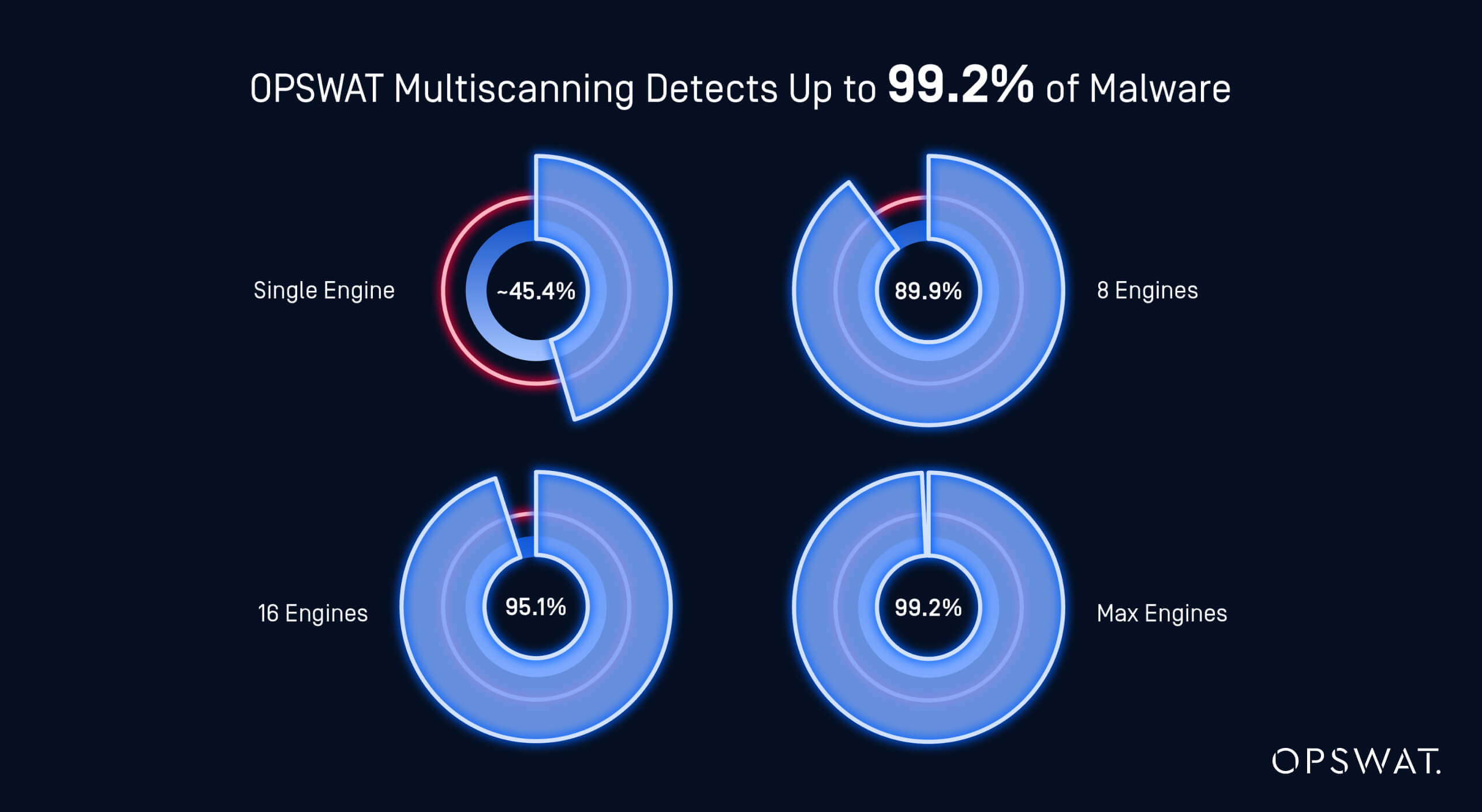
See why multi-engine detection is essential for combating sophisticated threats that can operate undetected for months.
Why One Antivirus Engine Is No Longer Enough
Firstly, antivirus engines are far from "dead."
Modern engines update their threat databases multiple times a day, constantly refining their ability to recognize and block the thousands of well-known threats circulating online.
For everyday, already-cataloged malware, a traditional virus scan file still provides a solid first line of defense.
Unfortunately, the darker side of the digital world adapts just as quickly, if not faster.
It has always been this way in warfare: every improvement in defense gives rise to a new offensive tactic.
Cybersecurity is no exception.
This evolution is exactly why relying on a single-engine antivirus is no longer enough. Traditional scanners tend to rely on one detection engine, giving you just one perspective on whether a file is dangerous or not.
But modern malware effortlessly sidesteps single-engine detection by using obfuscation, encryption, file morphing, and multi-stage payload delivery.
A recent example is the Shadow Vector attack in Colombia.
Attackers distributed what appeared to be legitimate court-related SVG images, harmless at first glance.
Once opened, the SVG redirected victims to a password-protected archive containing a clean-looking executable paired with a malicious DLL.
With DLL side-loading, the attackers deployed remote-access tools while bypassing single-engine antivirus detection.
The Shadow Vector attacks are a perfect example of how multi-stage, obfuscated payloads can slip through a routine malware scan online and create a dangerous detection gap.
Shadow Vector showed that even simple-seeming files can deliver zero-day malware or novel attack chains that a single-engine approach may completely miss.
Inside the Multi-Engine File Scanning Process
At the heart of high-fidelity malware detection lies parallel multiscanning: running multiple antivirus engines simultaneously and aggregating their results into a single verdict.
OPSWAT's patented Multiscanning technology (used in MetaDefender Cloud) leverages 20+ anti-malware engines in parallel, combining signature-based, heuristic, and machine learning algorithms to maximize coverage.
For example, you might see a result like "6/24 engines flagged this file."
This means that six engines identified a potential threat while the rest marked the file as clean. When several engines agree, the likelihood of a real threat is higher.
In other cases, the ratio may be much lower if sometimes only one engine flags the file.
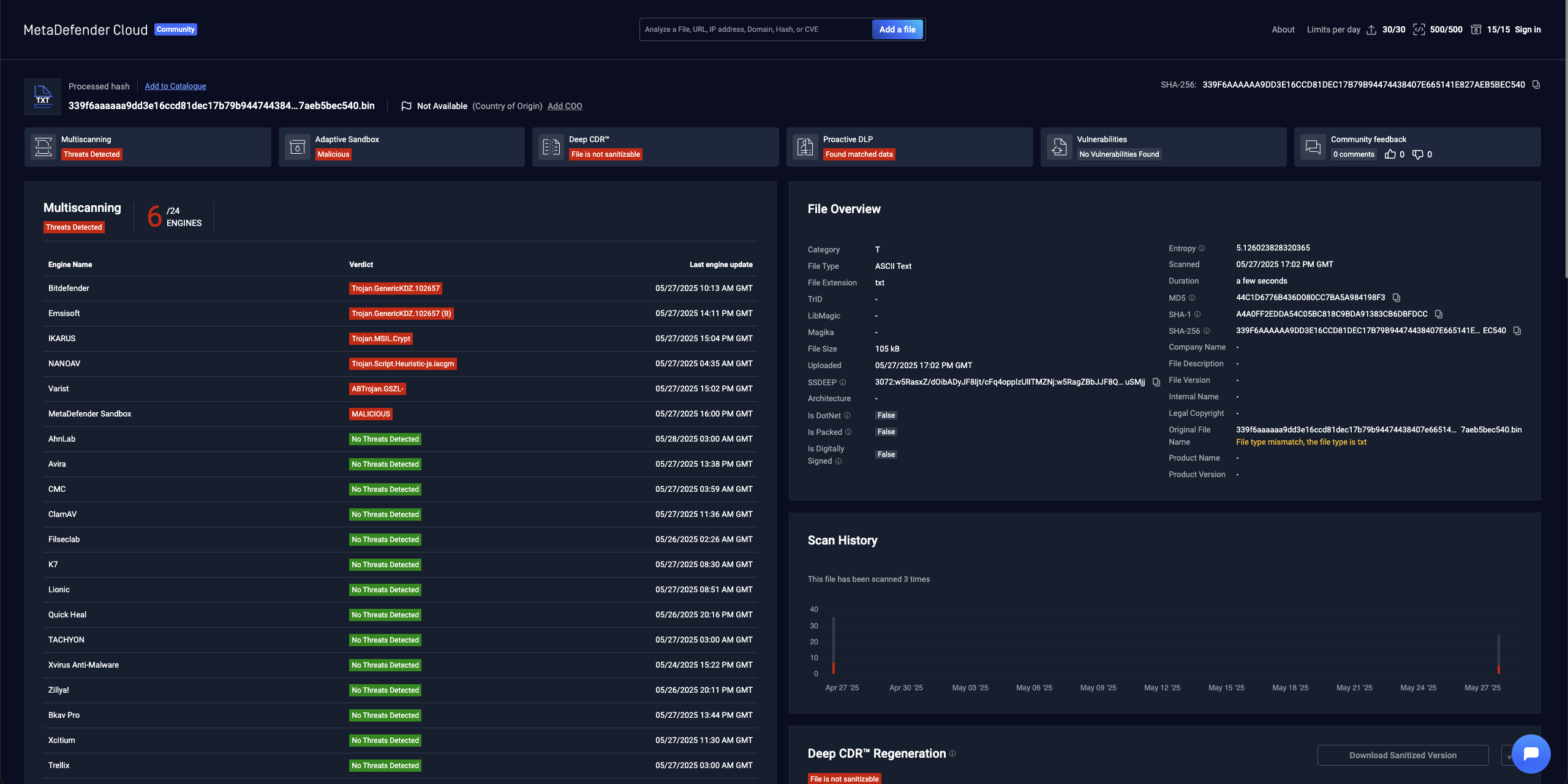
Since multiscanning only works for known malware, MetaDefender Cloud adds an Advanced Protection layer, powered by Deep CDR™.
Unlike multiscanning, Deep CDR doesn't wait to detect malware, but rather takes a proactive approach.
With Deep CDR, the assumption that all files could be malicious is made, so the technology strips out potentially harmful active content like scripts, macros, and embedded objects from files. This process is called "disarming".
After disarming, it rebuilds the file into a clean version, without affecting its usability.
Following CDR sanitization, suspicious files can be dynamically analyzed with the Adaptive Sandbox.
If Sandboxing is enabled, the system triggers behavioral inspection needed, giving you deep insight into how the file behaves.
Together, Multiscanning, Deep CDR, and Sandboxing technologies form a detection and prevention model that's far more resilient than a simple virus scan file with a single engine, especially against evasive threats.
Why Multi-Engine Scanning Offers Real Protection
You might believe that multi-engine scanning is merely a tale of numbers; more engines equal more scanning power.
While this assumption is true, multi-engine scanning comes with additional benefits in terms of quality as well, not only quantity.
Let's examine the benefits one by one.
Higher Accuracy
The most obvious advantage of online multiscanning is higher detection accuracy.
With multiple antivirus engines running in parallel, you dramatically increase threat coverage.
When conducting a test for the top 10,000 active threats, OPSWAT's Metascan™ Multiscanning technology achieved 84% detection with 8 engines and +98% percent detection with 20 engines. In both cases, multiscanning was far outperforming most single-engine solutions.
Fewer False Negatives
A false negative happens when a security system fails to detect a real threat, like the Plague malware case mentioned above.
With multiscanning, if one engine misses a threat, there's a strong chance another will catch it.
In one study on the Upatre malware outbreak, only 1 out of 43 engines detected it on day 1, but by day 4, 25 engines flagged it. Over time, this consensus built across engines confirms the threat was real, not a false alarm.
The multi-engine approach ensured earlier detection for any given threat, thus lowering the dangers of undetected malware infiltrating an environment.
Broader Malware Detection
Single AVs often excel in certain threat types (trojans, ransomware, phishing attachments), but they aren't always good at everything.
When you combine multiple engines, each brings its own strengths, meaning together they can cover far more strategic ground.
As security experts note, some engines just aren't tuned for advanced or uncommon malware, but multi-scanning fills those blind spots.
Community-Powered Trust
Beyond detection, multi-engine scanning also supports community-powered trust.
When you submit a file for analysis, your scan contributes to a shared reputation database. That reputation data reflects how often a file is scanned, flagged, or evolves over time, helping others make better, faster decisions about whether a file is safe or risky.
It's a collaborative model which strengthens threat intelligence and improves future file analysis.
In conclusion, multiscanning is as much about the number of engines as it is about the quality of a cybersecurity strategy and the way it brings people together to achieve more accurate and resilient protection.
Debunking the Myths: Speed, Cost, and Accuracy
No matter how many advantages multiscanning brings, one should always wonder about the fine print; are there any trade-offs to multi-engine scanning?
Some worries stand out and rightfully so; however, the reality of online multiscanning in 2025 is brighter than ever.
Is multiscanning too slow?
Some might imagine multi-engine scanning as a heavy process that takes minutes to complete.
And yet, cloud-based multiscanning runs in seconds, not minutes.
Yes, modern security platforms use dozens of engines in parallel, distributing the workload across scalable cloud infrastructure. But in optimized environments, advanced operations such as multiscanning can reach median processing times around eight seconds.
Is multiscanning expensive?
It's an understandable concern, but no longer a real problem.
A decade ago, multi-engine scanning might have meant having to buy specialized hardware and install it in your location.
Today, you can find affordable options, or even free ones - such as MetaDefender Cloud, which can even be used without an account.
It was built for researchers, SOC analysts, threat hunters, and cybersecurity-aware users who need reliable solutions for scanning performance without enterprise overhead.
Cybersecurity shouldn't be hidden behind costs.
Is multiscanning noisy?
Some might think, and for good reason, that more engines mean more opinions, more verdicts, more alerts.
However, multiscanning doesn't refer to multiple engines operating in silos; all of them are used in the same scan.
If several engines deliver the same conclusion, the verdict strengthens.
Multiple engines won't translate into multiple alerts; you'll just get a broader analysis and better understand the risks brought by your files.
Try Multi-Engine Scanning for Free with MetaDefender Cloud
If you are curious or interested in trying multiscanning for your files, you can get started right now.
Protect your devices with free, online malware scanning using MetaDefender Cloud. Perform a free virus scan on files, URLs, IPs, or hashes, and get instant results with 20+ antivirus engines.
More than an online file scanner, its Deep CDR technology goes beyond detection by sanitizing files, keeping them safe. This happens without modifying file structure, so you it remains usable, even after CDR.
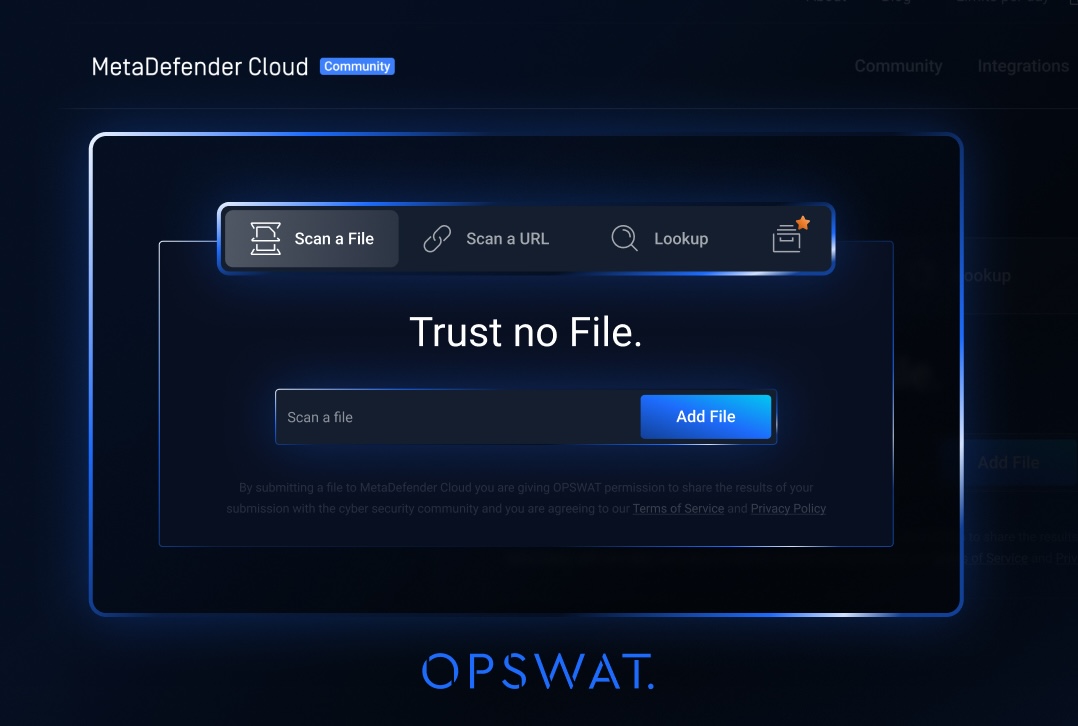
Every scan contributes to Community Intelligence, helping improve global threat detection and keeping the cybersecurity ecosystem stronger for everyone.
While platforms like VirusTotal also offer multi-engine scanning, MetaDefender Cloud emphasizes enterprise-grade consistency, proactive data protection, and performs Deep CDR in over 180 file types.
The Next Phase of Online Multiscanning
As malware has become more polymorphic and capable of evading traditional signature-based detection, a more dynamic, multi-layered approach is needed.
In this sense, the future of file scanning will probably focus more on behavioral and Heuristic Analysis. AVs will not solely rely on predefined signatures, but look at how the file acts and examine its code for suspicious properties.
This will involve analyzing file behaviors, such as file system changes, network requests, or interactions with the operating system.
With AI becoming the norm, multiscanning could incorporate multiple AVs, each using different machine learning models that are continuously updated with new data about malware behaviors, allowing the system to detect even zero-day threats.
AV solutions can also become more deeply connected to cloud platforms for real-time updates and global threat intelligence sharing.
As threats are detected on endpoints, these could be automatically flagged and categorized, feeding back into the cloud-based scanning system.
Rather than operating in isolation, AV engines might share anonymized data or even collaborate in real-time to provide a more holistic view of evolving threats.
As for integrations with the Cloud, EDR (Endpoint Detection and Response) systems are already widely used for monitoring endpoints.
The next natural step is integrating EDR with cloud platforms to provide a real-time, unified defense layer.
This would allow for constant threat monitoring across all devices and cloud environments, enabling automatic responses like isolating an infected device or halting suspicious network traffic.
Finally, as organizations move to cloud environments, Zero Trust principles will dominate.
This model ensures that no device or user is trusted by default.
The future of multiscanning will heavily depend on the ability of various organizations, vendors, and users to share real-time, actionable intelligence to detect, mitigate, and respond to threats.
Stronger Together Applies to Engines and People as Well
If we're in a situation where malware evolves faster than traditional defenses can keep up, single-engine detection shouldn't even be an option anymore.
No matter how advanced one engine may be, it still offers just one viewpoint, creating blind spots that attackers can't wait to exploit.
That's why online multiscanning has gone from optional to a fundamental requirement for a threat-adaptive security strategy in 2025.
By combining the strengths of multiple engines, Deep CDR, and the Adaptive Sandbox, you gain broader visibility, higher accuracy, and a far better chance of catching the threats that would otherwise slip through.
MetaDefender Cloud takes this powerful model and places it directly into the hands of everyone who needs it, at no cost.
Researchers, analysts, and everyday users no longer need to deal with the barriers that once separated enterprise-grade scanning from the general public.
Because in cybersecurity, true protection should be achieved together, through shared intelligence, stronger coverage, and tools built for everyone.
Scan your file online today at metadefender.com.
Frequently Asked Questions (FAQs)
What is a multi-engine file scanner?
A multi-engine file scanner uses multiple antivirus engines to analyze and detect malware or other malicious content in a file, detecting threats that might be missed by a single antivirus engine.
Will scanning with multiple engines slow down my process?
While multiscanning does take longer, the speed impact is minimal, depending on the file size and the number of engines being used. Some multi-engine scanners are optimized to minimize delays.
How can I scan a file for malware online?
Use a free tool, such as MetaDefender Cloud, which allows you to perform multiscanning, Deep CDR, and Sandboxing. No account required, you simply need to upload your files, and you'll get the results.
What is multi-engine file scanning?
Multi-engine file scanning (multiscanning) refers to scanning a file with multiple antivirus engines.
Is MetaDefender Cloud a free virus scanner?
Yes, MetaDefender Cloud is a free online file and malware scanner. However, it does more than simply scanning. Its Deep CDR technology goes beyond detection by sanitizing files and keeping them safe to use, without modifying file structure.
How does it differ from VirusTotal?
MetaDefender Cloud also performs Deep CDR – strips a file to its components, removing any hidden threats, especially useful for Zero-Day threats – and Adaptive Sandboxing, which opens suspicious files in a safe environment, to observe threat behaviour.
Should I rescan files periodically?
Yes, it is a good practice to rescan files periodically, especially if they are stored for long periods. New threats and vulnerabilities are discovered regularly, and malware that may have been undetectable earlier could now be identified by updated antivirus engines.